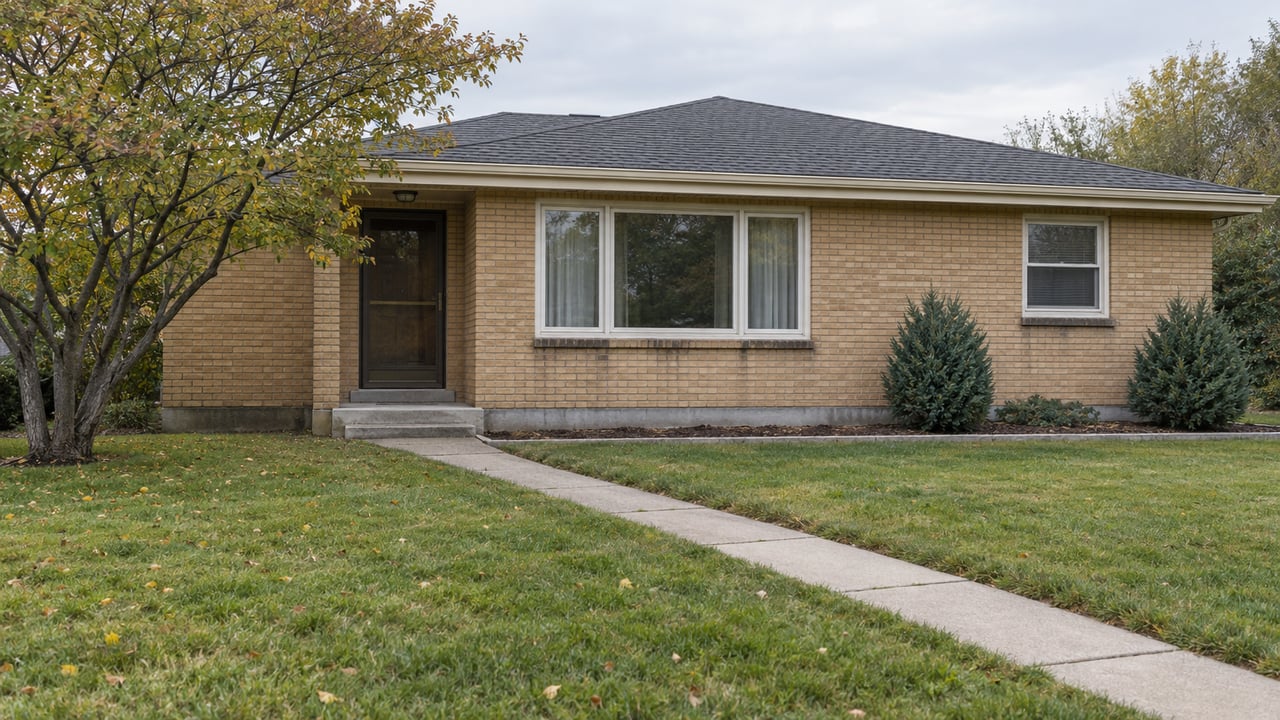
If you are closing on a pre-1960 Arvada home this fall, ask your inspector one specific question: what is the water service line made of, and has anyone actually checked. Most sellers cannot answer that. Most general home inspections do not test for it. And the one program in Arvada built to answer it for free is three months from shutting its doors.
That is the part of this story that does not show up in a listing description or a standard inspection report. It is a city ordinance with a hard deadline, sitting quietly underneath any older-home transaction in Arvada right now, and it changes who pays for a pipe problem depending on which side of December 31 you happen to close on.
The Ordinance Behind the Deadline
In March 2024, Arvada's City Council prohibited lead and pre-1960 galvanized steel service lines anywhere in the city's water system. The rule covers the customer-owned portion of the line, the pipe running from the water main to the foundation, which is the part homeowners are responsible for even though the city maintains everything on its side of the meter.
To help residents comply, the city built a free replacement program that runs from May 1, 2024 through December 31, 2026. During that window, Arvada will schedule a free visual inspection, a potholing investigation if needed, and a full replacement at no cost to the owner for any confirmed lead service line. After that date, the free program ends. Owners who still have a lead line, or a line the city has never been able to categorize, become eligible for fines starting in 2027, and those fines run $1,000 a year until the line is replaced.
That timeline matters for a very specific reason. A contract signed today, in late September 2026, will typically close somewhere between October and December. That is the exact window in which the free program is still technically open but running out of runway to actually schedule and complete a replacement before it disappears. A seller who discovers a lead or pre-1960 galvanized line in November has very little time left to get it swapped for free. A buyer who closes in January inherits a house where that option is already gone.
Why the Disclosure Form Might Not Mention It
Colorado's Seller's Property Disclosure form asks sellers to describe the property's water source and to note whether galvanized or polybutylene pipe currently exists in the residence. But Colorado disclosure law only requires sellers to report what they actually know. There is no statute requiring a seller to test the line before signing, and plenty of owners of a 1960s or 70s Arvada home have simply never looked. If a seller genuinely does not know their line is galvanized, the box can honestly be left blank, and the form does its job without ever surfacing the issue.
A general home inspection does not reliably close that gap either. Standard inspections are visual walkthroughs. They typically do not test water pressure, scope sewer lines, or confirm pipe material behind a wall or below grade. That means a home can pass inspection cleanly while still carrying a service line that Arvada's own ordinance treats as prohibited.
The city built a low-effort way to check anyway. At the point where the water line enters the home, you can scrape a small section of exposed pipe with a coin or key and test it for magnetism. A dull gray, magnetic surface is galvanized steel. A shiny, non-magnetic surface is lead. A penny-colored, non-magnetic surface is copper. It takes a few minutes and answers a question that neither the disclosure form nor a standard inspection is built to catch.
Reading an Arvada Listing by Build Year
Arvada's own guidance is that homes built after 1959 are most likely to have copper service lines already, which makes build year the single most useful filter a buyer has before touring. Neighborhoods built during the city's mid-century growth wave, including pockets around West Woods and Westbury, are the areas most likely to still carry original galvanized supply piping from that era. Newer development areas like Candelas were built with copper or PEX from the start, which is a meaningfully different risk profile even at a similar price point.
| Area or build era | Typical construction period | Likely service line material | What it means for a transaction |
|---|---|---|---|
| West Woods, Westbury, similar mid-century pockets | 1960s to 1970s | Often original galvanized steel | Worth confirming material before writing an offer |
| Older core neighborhoods | Pre-1960 | Possible lead or banned galvanized | Only eligible for the city's free replacement through December 31, 2026 |
| Candelas and comparable newer development | 2010s and later | Copper or PEX | Minimal service line risk at time of purchase |
This is not a reason to avoid an older Arvada home. It is a reason to ask a build-year-specific question before the free option on the table disappears.
What the Free Window Actually Buys You
The financial gap between doing this now and doing it later is not small. A standalone plumbing inspection or scratch test costs a modest flat fee, generally in the range of $150 to $300. A full service line replacement done privately after the deadline, without the city's contractor and cost coverage, is a materially larger project. And a related but separate issue, a failing sewer lateral, commonly runs around $5,000 to repair and can climb well past that if the problem reaches the street and requires excavation and permitting.
None of those numbers are what the city charges for its own program. They are what the same category of problem costs once the free option is gone and a homeowner is paying market rate for the same work.
What This Means If You're Closing Before Year End
For a seller with a pre-1960 Arvada home, the practical move is to request the city's free inspection now rather than waiting for a buyer's inspector to raise the question mid-contract. Confirming the material early, and getting on the schedule for replacement if needed, keeps the free program's window relevant instead of theoretical. It also gives you a clean answer on the disclosure form rather than an honest but unhelpful blank.
For a buyer, the useful step is asking about service line material before writing an offer on anything built before 1970 in Arvada, particularly in the older pockets around West Woods and Westbury. If the seller does not know, the city's inventory map and inspection request form are the fastest way to find out. If a replacement turns out to be needed and the timeline is tight, that is a fair point to raise in negotiation while the free program still applies, rather than after January 1 when the cost shifts entirely to whoever owns the house.
A Few Questions Worth Asking
Does Arvada's water itself contain lead? No. The city has stated that no lead leaves its treatment plant. Lead in a home's water comes from lead or galvanized materials in the service line or interior plumbing, not from the water source itself.
What happens if a lead line is never reported? The city continues sending an annual Service Line Notification letter to known lead line addresses until it is replaced. Once discovered or reported, owners have 182 days to replace it before fines begin accruing.
Does this apply to homes outside Arvada's city limits but inside its water district? Customers within Arvada's water district but outside city limits may also need a county permit in addition to the city's process, which is worth confirming case by case before assuming the free program applies exactly the same way.
Older Arvada homes have plenty going for them, from mature trees to established blocks that newer development simply cannot replicate. Knowing what is running under the floor before the free fix expires just keeps that appeal from turning into a surprise at closing.
If you are buying or selling a pre-1960 home anywhere in Arvada and want a straight answer on how this timeline affects your specific contract, Envision Realty Group can walk through it with you before you write or accept an offer.