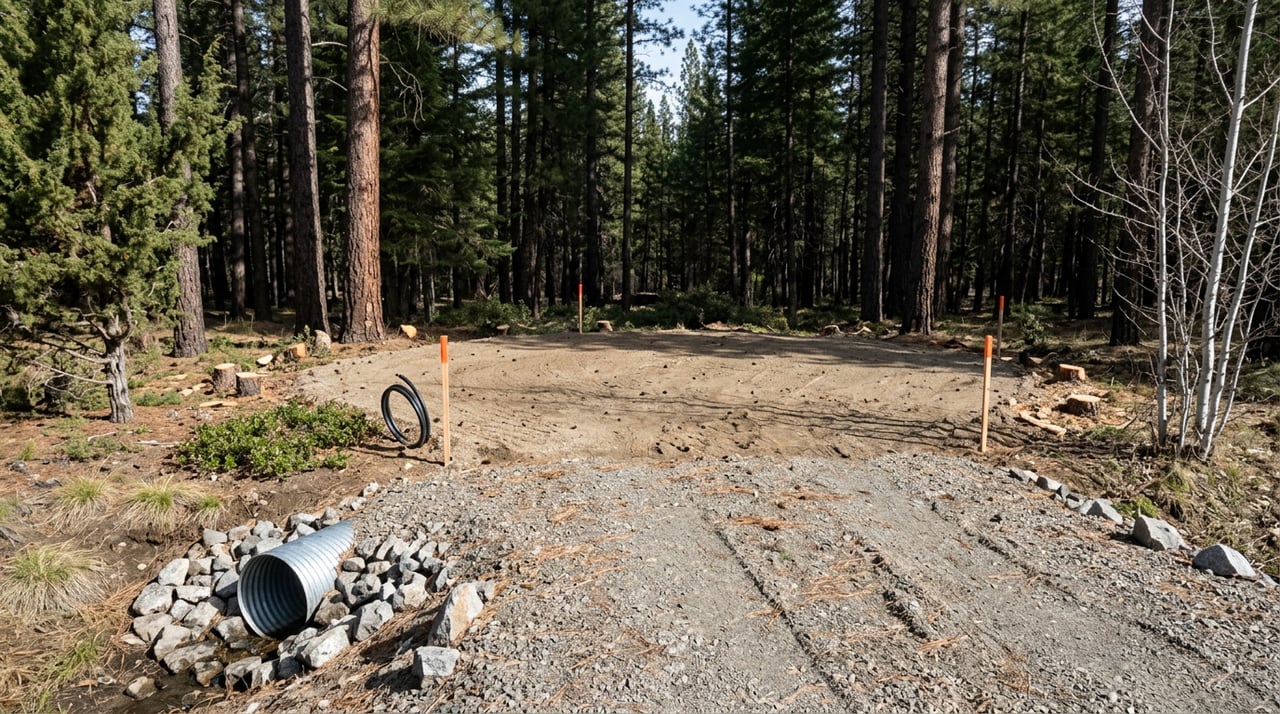
Thinking about buying land or acreage in Conifer but not sure where to start? Mountain parcels can be rewarding, yet they come with extra steps that most home purchases never face. You want to know what you can build, what it will cost, and how long it will take. In this guide, you’ll learn the key checks that protect your budget and timeline in unincorporated Jefferson County, plus where to verify each item. Let’s dive in.
Why land buys take longer
Buying raw land is a feasibility project. Before you build, the county will expect proof of legal access, sanitation, water, slope and soils stability, wildfire provisions, and grading compliance. The county’s Building Permit checklist outlines these requirements and typical review steps.
Plan for multiple reviews on separate tracks. In a smooth case, Planning and Zoning often takes about a month, and Building Safety plan review commonly runs 3 to 6 weeks for residential projects once your packet is complete. Septic, access, and grading reviews may add time. Build that into your offer and closing plan so you avoid rushed decisions.
Access and driveway rules
Legal access proof
Start by confirming recorded, deeded access to the parcel. Look for a platted road, ingress or egress easements, or a private road of record with adequate width. Jefferson County details acceptable proof in its Prove Access to My Property guide. Treat any unrecorded track or implied access as a risk until you have clear documentation.
County access permits
If your driveway will connect to a county road, you will likely need an Access Permit. The permit covers the cut into the right of way and the first segment of your driveway, and it includes inspections by Road and Bridge. Minimum sight distance and spacing rules also apply. Review the county Access Permit application and standards early if the parcel fronts a county roadway.
Private roads and fire review
If your site is reached by a private road or easement, the county will look for a written advisory from the local fire protection district confirming it can serve the road with emergency vehicles. Request this letter during due diligence. It is commonly required by the time you submit your building permit.
Slope, soils, and grading
Steep slopes over 30 percent
Hillside parcels in Conifer often need engineered grading, especially where slopes exceed 30 percent. Jefferson County’s Land Disturbance rules explain when you will need engineered plans and when a conceptual driveway plan is expected for steep sites. Review Section 16: Land Disturbance with your civil or geotechnical engineer.
Geologic hazard checks
Check for mapped geologic hazards, such as dipping bedrock or unstable gulches, and read any applicable plat notes. These overlays can affect foundation design or building location. A site visit with a geotechnical engineer helps you confirm a stable building pad and realistic mitigation costs.
Floodplain and drainage
Confirm whether any part of your project area lies in a FEMA 100‑year floodplain or the county Floodplain Overlay. Work in these areas requires a Floodplain Development Permit, and in some cases a study or FEMA map action. Start by reviewing the county’s Floodplain Management page and checking the parcel in JMap before you assume a site is buildable.
Septic feasibility and timing
OWTS process and timing
Most rural Conifer lots rely on on‑site wastewater treatment systems. Jefferson County Public Health permits and inspects these systems, and publishes all forms on the OWTS page. A typical path includes a soils evaluation, a septic design (engineered where required), and permit issuance. The county notes it typically takes about 14 working days to process an application, though complexity can extend that timeline. See the county OWTS FAQ for transfer and processing details.
Testing requirements and records
In some locations and for some older lots, the county requires bacteria and nitrate lab tests for well water as part of septic approvals. Review local rules and confirm whether your lot triggers testing on the OWTS page. Use the county’s records lookup to see neighboring system types and any constraints that might apply to your site.
Wells and water supply
New well permits
In Colorado, new wells that divert groundwater require a state well permit. The Colorado Division of Water Resources provides the residential permit form and instructions online. A licensed driller usually handles the application and drilling. Start with the DWR eForms portal to understand the process and timelines.
Existing wells at closing
If the property already has a well, gather the permit number, completion report, and any recent yield or water quality tests. Jefferson County expects a copy of the well permit and State Test Report when you apply for a building permit where a well will serve the home. If records are missing, plan for time to update documentation or pursue a new permit.
Utilities and internet
- Electricity. Many Conifer parcels are served by the local electric cooperative. Contact the provider early for a service availability letter and a cost estimate to extend lines or set poles. Ask whether service is overhead or underground and whether easements are needed.
- Gas and heating. Natural gas is not universal in the foothills. Some homes have access to gas service where mains exist, while many rely on propane or all‑electric systems. Confirm service area coverage by address and budget for propane if needed.
- Broadband. Service is location specific. Some parcels have fixed wireless or DSL, while many rely on satellite. Use provider address lookups and ask about speeds, latency, and data caps if you plan to work from home.
Tip: Do not rely on an MLS utilities field as proof of availability. Request written confirmations from each provider before you remove contingencies.
Wildfire and defensible space
WUI overlay requirements
Much of Conifer sits within the county’s Wildland Urban Interface. New construction in the overlay requires defensible space measures and may require structure hardening. Review Section 39: Wildfire Hazard Overlay District to understand what will be required at permit stage.
Fire district coordination
The local fire protection district, such as Elk Creek Fire Protection District, is a required reviewer on access and may set standards for road width, grade, and turnouts. Contact the district early to align your driveway plan, water supply, and construction schedule with their expectations.
Grading permits and land disturbance
If construction or site work will disturb 0.5 acre or more, you will likely need a county grading permit and engineered plans stamped by a Colorado professional engineer. Smaller sites may still need a Notice of Intent or erosion control measures. The county’s worksheet explains thresholds and submittals. Start with the Do I Need a Land Disturbance Permit guide and confirm requirements with your engineer.
Permitting sequence and timing
Use this order of operations to keep your project moving. Timeframes reflect typical county targets and common experience for complete submittals.
- Zoning and lot legality. Confirm zoning, plat notes, and that the lot was properly created under state subdivision rules (SB35). The county Building Permit checklist lists proof required.
- Access. Verify deeded access and, if connecting to a county road, apply for the Access Permit. If using a private road, request the fire district advisory letter on emergency access.
- Floodplain. Check overlays and apply for a Floodplain Development Permit if any work lies in the mapped flood area.
- Septic. Use county records for context, then pursue OWTS design and permitting through Jefferson County Public Health. Processing is typically about 14 working days for applications, subject to complexity.
- Water. For wells, gather the well permit and State Test Report or apply for a new permit through the DWR eForms portal. If a water provider serves the parcel, obtain a written letter that taps are available.
- Land disturbance. If your disturbance area meets thresholds, prepare engineered grading plans. Review Section 16: Land Disturbance and the Land Disturbance guide.
- Building permit. Submit the full packet. Planning and Zoning typically completes in about one month, followed by Building Safety plan review in about 3 to 6 weeks for residential projects, depending on completeness and corrections.
- Inspections and CO. County inspections are staged. Final sign‑off occurs after all referrals, including Public Health, Road and Bridge, Fire District, and Floodplain, are satisfied.
Offer strategy and contingencies
When you write an offer on land, give yourself enough time to complete key checks and walk away if a red flag appears. Consider adding:
- Access contingency. Time to secure an Access Permit pre‑approval or a fire district advisory letter for private roads.
- Septic and soils contingency. Authority to order a soils evaluation and a septic feasibility review. Right to terminate if the site needs an engineered system that exceeds your budget.
- Water contingency. Time to verify an existing well’s records and performance, or to apply for a new DWR permit.
- Land disturbance and grading contingency. Time to confirm whether the project triggers a grading permit and to estimate costs.
Your due diligence checklist
Use this list to organize your first 30 to 60 days.
- Title and recorded documents. Confirm easements, road maintenance agreements, and plat notes with your title company or a real estate attorney.
- County GIS review. Check zoning, floodplain, wildfire overlay, past permits, and septic records in JMap.
- Access plan. Verify deeded access and driveway feasibility. If needed, start the Access Permit review and consult the fire district.
- Septic. Pull OWTS records, order a soils evaluation, and plan a system layout. Review the OWTS page for current forms.
- Water. Gather well documentation and consult a licensed driller. Start the DWR eForms process if you will drill a new well.
- Slope and soils. Walk the site with a civil or geotechnical engineer to confirm buildable pads and driveway routing. Review Section 16 for grading triggers.
- Wildfire readiness. Plan defensible space and structure hardening that align with WUI overlay requirements.
- Utilities. Request written availability and cost estimates from electric, gas, and internet providers. Do not rely on listing remarks as proof.
- Survey. Order an ILC or full boundary survey early, especially if you are close to setbacks.
Work with a local guide
Buying land in Conifer rewards preparation. With a clear plan, you can avoid surprises and move from offer to a build‑ready permit with confidence. If you want a hands‑on partner who understands septic and well issues, grading triggers, and Jefferson County sequencing, connect with Envision Realty Group. Talk to Danna about your goals, and we’ll map out a smart, step‑by‑step path from raw ground to a home you love.
FAQs
What makes buying land in Conifer take longer than buying a home?
- You must prove access, sanitation, water, grading compliance, wildfire readiness, and pass Planning and Building plan reviews, which typically run about one month and 3 to 6 weeks respectively for complete submittals per the county permit checklist.
How do you verify legal access for a Conifer parcel?
- Pull recorded deeds and easements, then compare them to county standards in the Prove Access to My Property guide; if connecting to a county road, review the Access Permit requirements.
What septic permit timeline should you expect in Jefferson County?
- After your soils work and design are in, the county notes OWTS applications typically process in about 14 working days, with complexity and corrections affecting timing; see the OWTS FAQ.
Do you need a well permit to build in Conifer, Colorado?
- New groundwater wells require a state permit from the Colorado Division of Water Resources; start with the DWR eForms portal and consult a licensed well driller for depth and cost based on nearby wells.
What does the WUI overlay mean for new builds in Conifer?
- If your site lies in the Wildland Urban Interface, expect defensible space and possible structure hardening as part of building permits; review Section 39 and coordinate early with the local fire district.
When should you apply for a grading permit in Jefferson County?
- If your project will disturb 0.5 acre or more, you will likely need a grading permit with engineered plans; use the county’s Land Disturbance guide and Section 16 to confirm thresholds and submittals.